Match the storage to how often you use the ladder and how much it weighs. A step ladder you use every week goes on wall hooks at chest height. An extension ladder you use a few times a year goes on horizontal wall hooks screwed into studs or on a ceiling rack. A heavy ladder in a garage with a high ceiling goes on a pulley hoist, so you never press 40 lb of aluminum over your head. This guide sizes each option from the manufacturers’ published ratings and is spec-based: we compare listings and manuals, not our own installs. Disclosure: As an Amazon Associate I earn from qualifying purchases. See /disclosure/.
The decision in one table
Option
Best for
Typical capacity (published examples)
Mounts to
Trade-off
Wall hooks (vertical)
Step ladders used often
Varies by hook; check the rating
Wall studs
Uses wall space at the height you want for shelves
Wall hooks (horizontal)
Extension ladders, occasional use
Varies; pairs of hooks share the load
Wall studs, 2 or more
Needs a long clear wall
Ceiling rack
Ladders used a few times a year
StoreYourBoard overhead rack: 75 lb total
Ceiling joists
You lift the ladder overhead from another ladder or a step
Pulley hoist
Heavy ladders, high ceilings
StoreYourBoard pulley system: 150 lb total
Ceiling joists
Slower; needs clear space under it to lower
Floor-level in a rack
Ladders that must be grabbed fast
n/a
Floor plus a wall strap
Takes floor space; can fall if not secured
Two numbers decide everything: the ladder’s own weight and how often you use it.
Know what your ladder weighs (not its duty rating)
A common mistake is confusing the ladder’s duty rating with its weight. The ANSI A14 duty rating is how much the ladder can carry in use:
ANSI type
Working load
Described as
IAA
375 lb
Special duty
IA
300 lb
Extra heavy duty industrial
I
250 lb
Heavy duty industrial
II
225 lb
Medium duty commercial
III
200 lb
Light duty household
Source: Cisco-Eagle ladder safety summary; ladder makers note that the rating covers the user plus clothing, tools and materials. That figure tells you nothing about what the ladder weighs on a hook.
For storage, the ladder’s own weight is the number that matters. Published examples:
Werner D1228-2, 28 ft aluminum extension ladder (Type II): about 43 lb per retailer spec listings.
Little Giant Velocity 22 multi-position ladder (Type IA): listed at roughly 30 to 40 lb depending on the retailer; the listings disagree, so check the label.
Fiberglass extension ladders: generally heavier than aluminum of the same length; Werner’s 28 ft fiberglass D6228-2 is Type IA, 300 lb, but we could not find a published weight, so weigh yours or check the sticker.
Six-foot step ladders: much lighter, usually easy to lift onto a wall hook.
Step on a bathroom scale holding the ladder, subtract your own weight, and you have the figure to size hooks and racks against.
Wall hooks: the default for most ladders
Wall hooks are the cheapest, fastest option and the easiest to use. Two layouts:
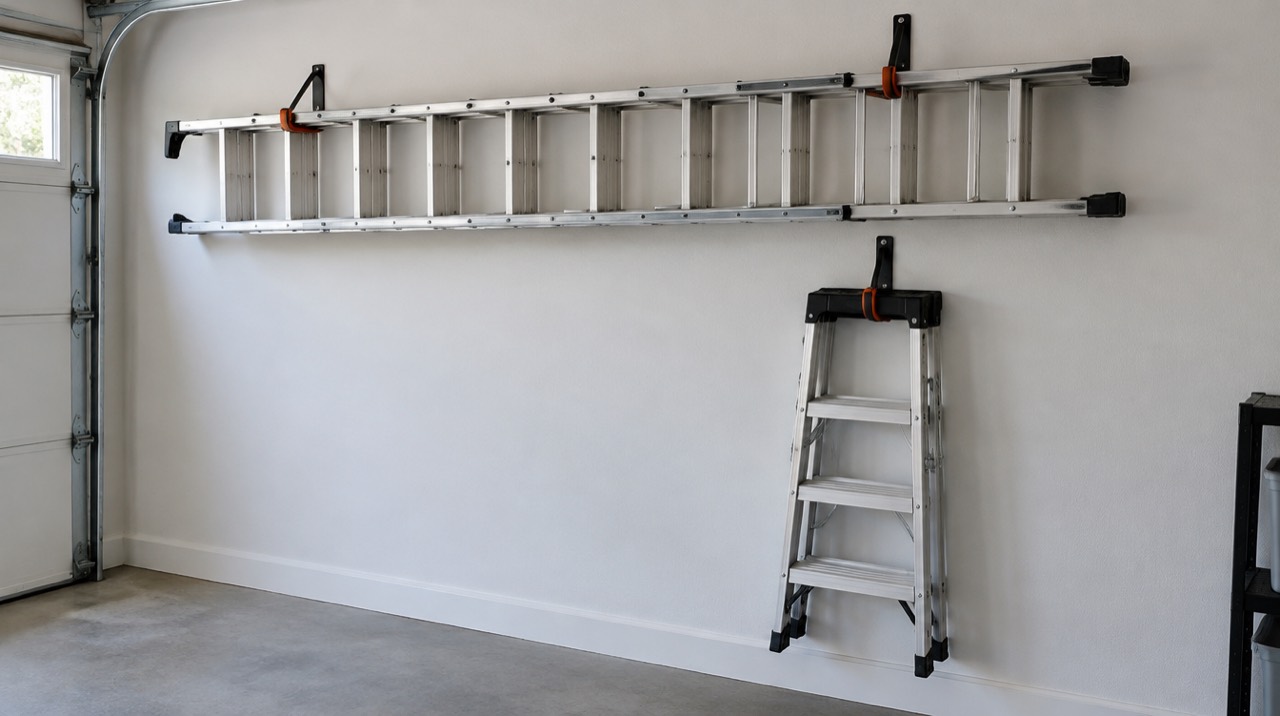
Vertical hang (step ladders). One sturdy hook at about chest height, screwed into a stud, holds a folded step ladder by its top or a rung. The ladder stays upright against the wall and comes off in one motion. This is the right spot for the ladder you use most.
Horizontal hang (extension and long ladders). Two hooks, each into its own stud, carry the ladder on its side rail along the wall. Place them so the ladder is supported toward each end rather than right at the tips, which limits sag along the length. In a wall framed at 16 inches on center, hooks four or five studs apart suit a 14-foot closed extension ladder; at 24-inch framing, three studs apart. Most residential walls are framed at 16 or 24 inches on center (City of Blaine framing handout).
Mounting rules that apply to any hook:
Studs, not drywall. Use a stud finder and drive the hook’s screws into the center of the stud. Drywall anchors are not a ladder mount.
Use the hook’s rating, not a guess. If a hook does not publish a load rating, size conservatively and use more hooks.
Padded or coated hooks protect rails and stop a ladder sliding.
Keep the path clear. A horizontal ladder at head height along a walkway is a forehead hazard. Put it above head height or where no one walks.
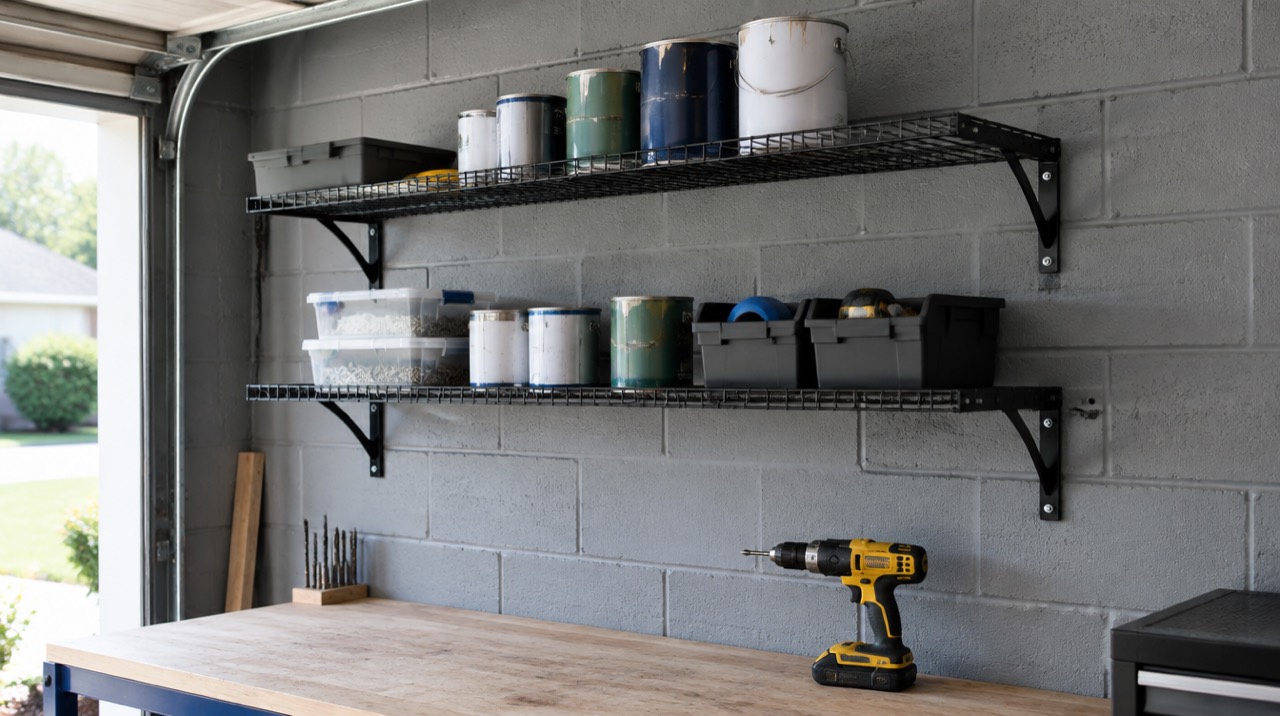
If you are also adding wall shelving, plan both together: rails and shelves compete for the same stud wall. Our guide to wall-mounted garage shelves covers stud spacing and wall types. Systems like the FLEXIMOUNTS 2 x 4 ft wall shelving with 8 hooks ($98.99) combine shelves and hooks on one stud-mounted bracket set; the listing says its hooks are for cords, tools, hoses and similar gear and does not rate them for ladders, so treat ladder use as outside its stated purpose. The listing also gives 300 lb per shelf in the bullets but a 400 lb maximum in its spec table, so plan on the lower figure.
Price as of November 18, 2026, 4:08 PM ET. Prices and availability are accurate as of the date/time indicated and are subject to change. Any price and availability information displayed on Amazon.com at the time of purchase will apply to the purchase of this product.
Ceiling racks: for ladders you rarely use
A ceiling ladder rack holds the ladder flat, rails down, just under the ceiling. It is the right choice for an extension ladder you use for gutters twice a year, especially in a one-car garage with no free wall.
Published examples:
StoreYourBoard adjustable overhead ladder rack ($64.99): 75 lb total, ceiling post adjusts from 12.125 to 20.125 inches below the ceiling and locks with a pin, rotating mounting plate fits joists running either way, wood mounting hardware included. Listed for folding, step, telescoping and extension ladders.
Price as of November 18, 2026, 4:08 PM ET. Prices and availability are accurate as of the date/time indicated and are subject to change. Any price and availability information displayed on Amazon.com at the time of purchase will apply to the purchase of this product.
StoreYourBoard Hi-Port 2 (double): 150 lb total, 75 lb per side, a rotating base for joists in either direction and ladders up to 36 inches wide, per the manufacturer’s page. The page gives two different clearance ranges, so measure before you mount.
At 43 lb, a 28-foot aluminum extension ladder uses more than half of a 75 lb rack’s rating; one ladder plus a light step ladder is the practical limit. A fiberglass extension ladder may be too heavy for a 75 lb rack. Check its weight first.
Install notes:
Into joists, with the supplied lag screws. Ceiling joists in garages are typically at 16 or 24 inches on center; find them with a stud finder and confirm with a small test nail, the method overhead-rack manuals use. Our overhead rack installation guide walks through finding joists and drilling pilots.
Clear the door and opener. Plan the rack outside the garage door’s travel and away from the opener rail.
Do not hang ladders from a storage rack. SafeRacks’ overhead rack manual says not to hang from the rack, and its rating assumes loads sitting on the deck. If you already have a ceiling storage rack, the ladder still needs its own mount.
The catch with any ceiling rack is the lift. Putting a 40 lb ladder up there means raising it above your head, usually from a step stool. If that is not something you can do comfortably, use wall hooks or a hoist.
Pulley hoists: heavy ladders and high ceilings
A hoist uses ropes and pulleys to raise the ladder to the ceiling and lower it back to a comfortable height. The StoreYourBoard ladder ceiling pulley system is listed at 150 lb total with a 2:1 mechanical advantage, adjustable loading straps for extension, folding, telescoping and step ladders, and hardware for mounting parallel or perpendicular to the joists.
With a 2:1 system you pull roughly half the load on the rope, ignoring friction. That is the main reason to choose a hoist: a heavy fiberglass extension ladder becomes manageable. Hoists suit garages with 10-foot or higher ceilings, where a fixed rack would be out of reach. The trade-offs are speed (raising and lowering takes longer than lifting a step ladder off a hook) and a clear space underneath: nothing parked or stored where the ladder comes down. Tie off the rope on its cleat every time.
For bulkier overhead storage on a lift, a crank-down platform such as the Racor PHL-1R (250 lb, 4 x 4 ft platform per its listing) is an option, but a 4 x 4 platform is too short for a long ladder. Our planned guides to motorized ceiling storage lifts and ceiling storage for bikes and kayaks cover lifts in more depth.
Where not to keep a ladder
On the floor leaning against a wall. A leaning ladder can slide or be knocked over onto a car or a person. If it must stand, strap it to the wall.
Flat on the slab. Water from cars and the door seal sits on the floor; aluminum and fiberglass are fine wet, but feet, rungs and labels are not improved by it, and a ladder underfoot is a trip hazard.
In front of a sunny window. A Werner manual advises storing in a cool, dry, clean place out of direct sunlight (Werner manual copy), and Werner safety guidance notes that fiberglass and plastic parts should be kept out of direct sunlight.
With things stacked on it. A ladder stored flat is not a shelf. Weight piled on the rails can bend them.
Where children can climb it. Store it high or locked to its hooks.
Inspect when you take it down
Storage is also the moment to catch damage. Before each use, check that rails are straight, rungs and locks are intact, feet are present, and labels (including the duty rating sticker) are readable. A ladder that has been knocked off a hook or had something dropped on it should be inspected before anyone climbs it. Follow the maker’s inspection checklist on the ladder’s labels and manual.
A sample layout
A two-car garage with a 9-foot ceiling, one 6-foot step ladder, one 28-foot aluminum extension ladder (about 43 lb):
Step ladder: one padded hook into a stud beside the house door, top of the ladder at about chest height.
Extension ladder: two horizontal hooks into studs on the side wall, above head height, outside the car-door swing zone.
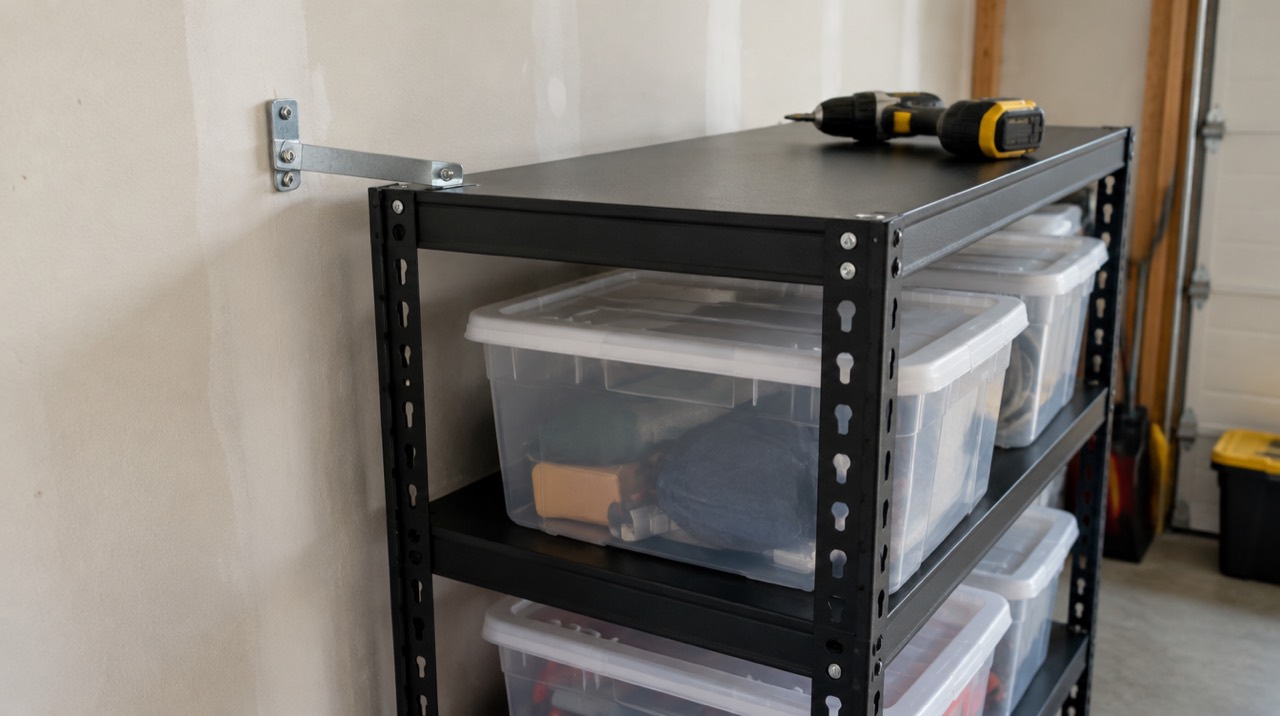
Shelving: a floor unit beneath the extension ladder for totes and tools, sized with our best garage shelving guide, anchored to the same wall.
If the side wall is full, swap step 2 for a ceiling rack outside the garage door’s travel, as long as you can lift the ladder up safely; if you cannot, use a hoist.
Bottom line
Weigh the ladder, decide how often you use it, and mount into studs or joists with hardware rated above that weight. Hooks for frequent use, ceiling racks for rare use, hoists for heavy ladders and high ceilings. Never hang a ladder from drywall or from an overhead storage rack, and keep it off the floor and out of the sun.
Frequently asked questions
What is the best way to store a ladder in a garage?
It depends on how often you use it. A step ladder you grab every week belongs on wall hooks at waist to chest height. An extension ladder you use a few times a year can go on horizontal wall hooks screwed into studs or on a ceiling rack. If the ceiling is high or the ladder is heavy, a pulley hoist lowers it to you instead of making you lift it overhead.
How much does an extension ladder weigh?
More than people expect. Werner's 28 ft aluminum extension ladder (D1228-2) is listed by several retailers at about 43 lb, and Little Giant's Velocity 22 multi-position ladder is listed at roughly 30 to 40 lb depending on the source. Fiberglass extension ladders of the same length are generally heavier than aluminum. Check the label or spec sheet on yours and size the storage hardware to that weight.
Does a ladder's duty rating tell me what hooks to buy?
No. The ANSI duty rating (Type III 200 lb up to Type IAA 375 lb) is the working load the ladder can carry in use: the person plus clothing, tools and materials. It says nothing about what the ladder itself weighs. Storage hooks and racks need to be rated for the ladder's own weight, ideally with plenty of margin.
Can I hang a ladder from ceiling joists?
Yes, with hardware made for it, lagged into the joists, and within its rating. StoreYourBoard's overhead ladder rack is listed at 75 lb total and its pulley hoist at 150 lb, both mounting to wood ceiling joists with included hardware. Do not hang ladders from drywall alone, and do not hang them from an overhead storage rack; rack manuals such as SafeRacks' say not to hang from the rack.
Is it bad to store a ladder outside or in a hot garage?
Sunlight and moisture are the main concerns. A Werner manual advises storing in a cool, dry, clean place out of direct sunlight, and Werner safety material notes that fiberglass and plastic ladder parts should be kept out of direct sunlight. A garage is fine for most ladders if they are off the floor, away from a sunny window and out of standing water.
Free garage storage tools
Tote and Shelf Fit CalculatorPick your storage tote and shelf size to see how many fit per shelf, which way to face them, the overhang and how many units you need.
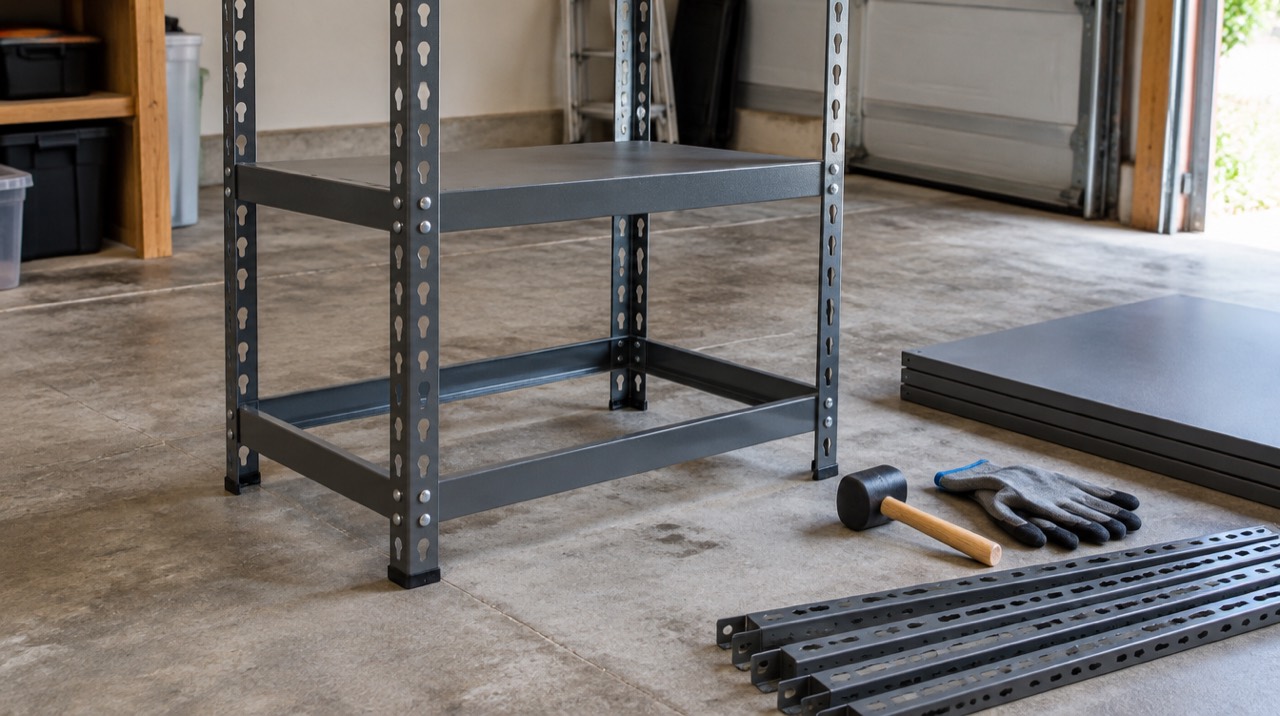
How to assemble boltless rivet shelving the way the manuals say: keyholes narrow end down, beams ledge-up, seat every rivet, level, anchor, avoid mistakes.
How to mount garage shelves on a concrete block or brick wall: hollow vs grouted block, Tapcon and sleeve anchor loads, ledger boards, and spec-based shelf picks.