In a humid or coastal garage, the finish decides how long shelving lasts. Short answer: skip chrome-plated wire (its makers rate it for dry rooms only), and choose by load. For light totes, plastic or resin shelving cannot rust. For heavy loads, powder-coated steel with wire decks works if you keep the feet dry and touch up chips; epoxy-coated wire, hot-dip galvanized and stainless steel cost more and last longer in salt air. This guide is spec-based, built from finish makers’ published guidance and product listings checked on 2026-10-28; we have not run corrosion tests.
Disclosure: As an Amazon Associate I earn from qualifying purchases. Some brands featured below pay a bonus commission through Amazon Creator Connections. See /disclosure/.
Why garages rust shelving
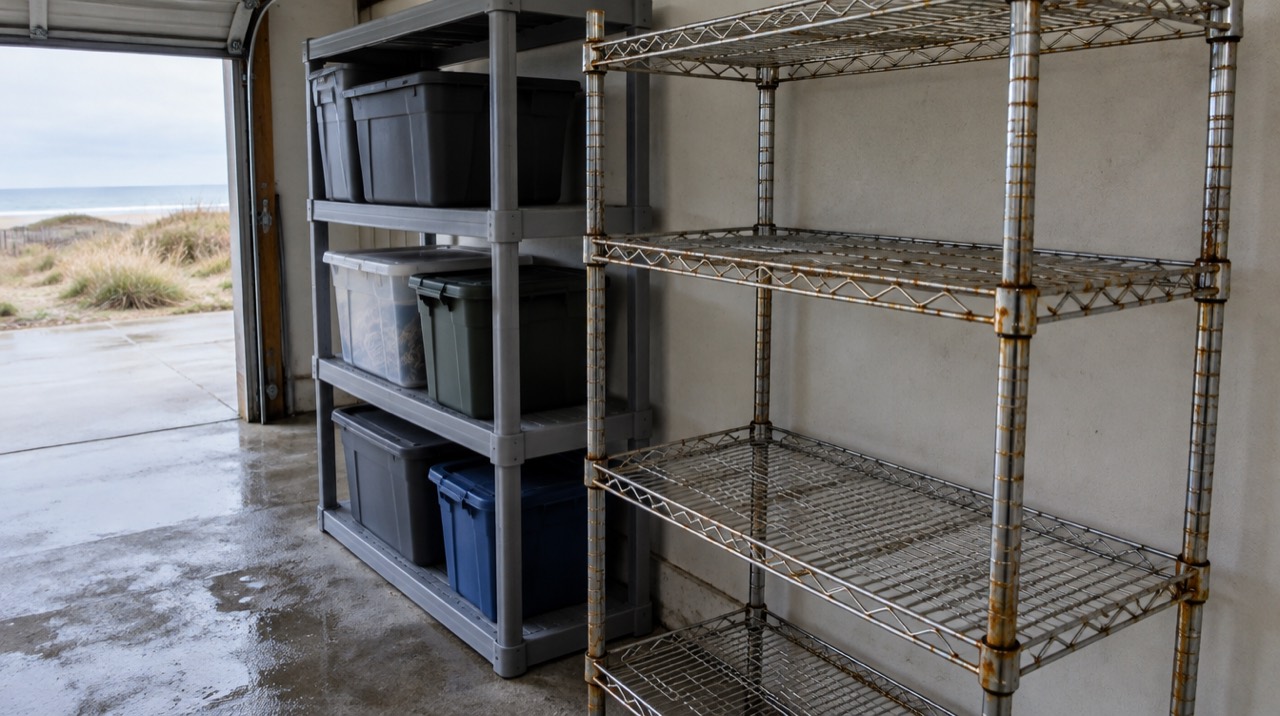
A garage is often the dampest room in a house. It is unconditioned, the slab can sweat when warm humid air meets cool concrete, cars bring in rain, snow and road salt, and near the coast the air itself carries salt. Steel rusts where water sits on it, and salt speeds that up. The spots that go first are predictable: the bottom few inches of each upright where it meets a wet floor, the underside of decks where a tote traps condensation, and any chip or scratch in the coating.
Wood products fail differently. MonsterRax warns that MDF shelving in high-moisture environments can warp, deteriorate or grow mold, and Edsal’s boltless shelving manual excludes moisture damage from its warranty. If your garage is damp, avoid particleboard and MDF decks entirely.
Finishes ranked for damp garages
Finish
How it protects
Damp garage
Salt air / coastal
Notes
Chrome plating
Thin bright plating
Poor
Poor
Metro: for dry storage; Seville Classics: corrosion resistance in dry environments
Powder coat (most garage steel)
Paint barrier
Fair to good while intact
Fair; chips rust
Inspect and touch up; no brand publishes salt-spray hours we found
Epoxy-coated wire
Bonded epoxy barrier
Good
Good
Metro rates Metroseal for high humidity, 15-year rust warranty
Hot-dip galvanized
Zinc layer that corrodes first, protecting steel
Good
Good
AGA: corrodes at about 1/30 the rate of bare steel
Chrome wire looks clean and is often the cheapest NSF-listed shelving. Metro, which popularized wire shelving, calls chrome “the classic choice for dry storage” and says it is NSF listed for dry environments only. Seville Classics says the same about its UltraDurable 60-inch chrome unit ($219.99): corrosion resistance in dry environments. It is a good unit (600 lb per shelf on leveling feet, per the listing) for a climate-controlled garage or basement, not for one that sweats.
Price as of November 18, 2026, 4:08 PM ET. Prices and availability are accurate as of the date/time indicated and are subject to change. Any price and availability information displayed on Amazon.com at the time of purchase will apply to the purchase of this product.
Powder coat: the garage default
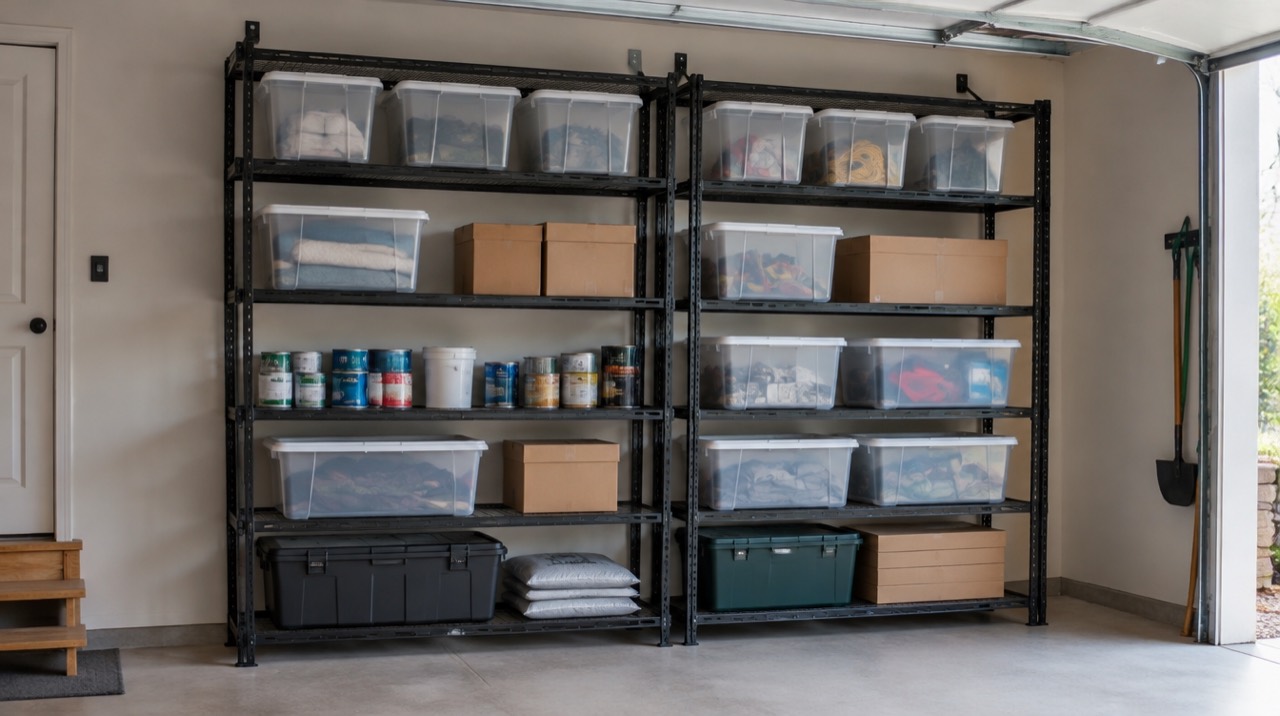
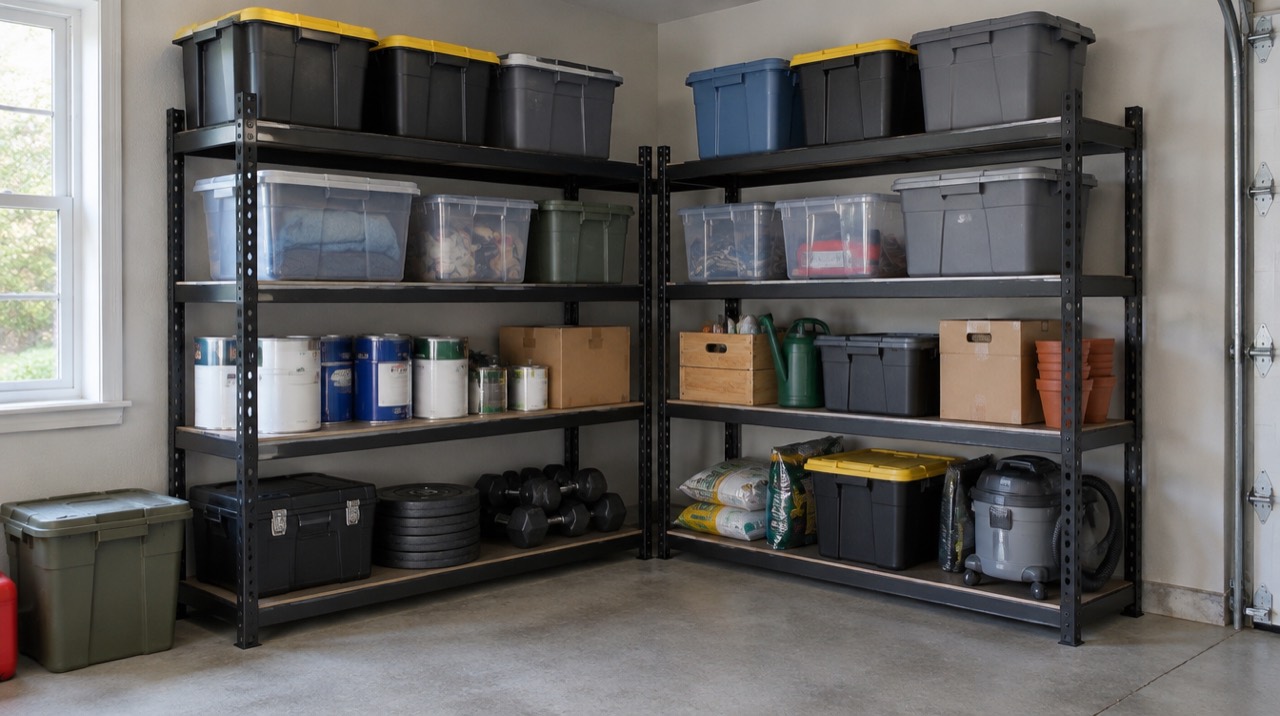
Nearly all boltless garage shelving, including the REIBII and Lionhon units on this site, is powder-coated steel. Powder coat is a baked-on paint layer, so it protects as long as it is unbroken. Rust starts at chips from dropped tools, scraped totes and the mallet you used at assembly, and at the bottom of the uprights. Treat a new powder-coated unit as rust resistant, not rust proof, and touch up chips with a matching enamel when you see them.
Deck choice matters as much as the frame. Wire decks let air circulate and water drain; solid steel decks and especially particleboard hold condensation under totes. See wire vs particleboard shelf decking for the full comparison.
Epoxy-coated wire: the commercial answer to humidity
Epoxy-coated wire is what restaurants use in walk-in coolers. Metro says its Metroseal epoxy is engineered for coolers, freezers and high-humidity environments and backs it with a 15-year warranty against rust (check the current terms; an older Metro document cites 12 years). It costs more than chrome and is usually sold through restaurant and industrial suppliers. Epoxy can still chip, and bare spots can rust, so the same touch-up rule applies.
Hot-dip galvanized: best value for salt air
Galvanizing coats steel in zinc. The zinc corrodes first and protects small scratches nearby, which is why bridges and boat trailers use it. The American Galvanizers Association says hot-dip galvanized coatings generally corrode at about 1/30 the rate of bare steel in the same environment, with life depending on coating thickness and how harsh the environment is. The catch for shoppers: “galvanized” on a shelving listing may mean a thinner electro-galvanized coat. Ask whether it is hot-dip and how thick, and expect a dull gray look.
Stainless steel: most durable, priciest
Metro sells stainless wire in types 304 and 316. Type 316 contains molybdenum and is the usual choice near salt water. Stainless shelving is mostly a commercial product and costs considerably more than powder-coated steel; it makes sense for a beach-house garage where everything else has failed.
Plastic and resin: cannot rust, carries less
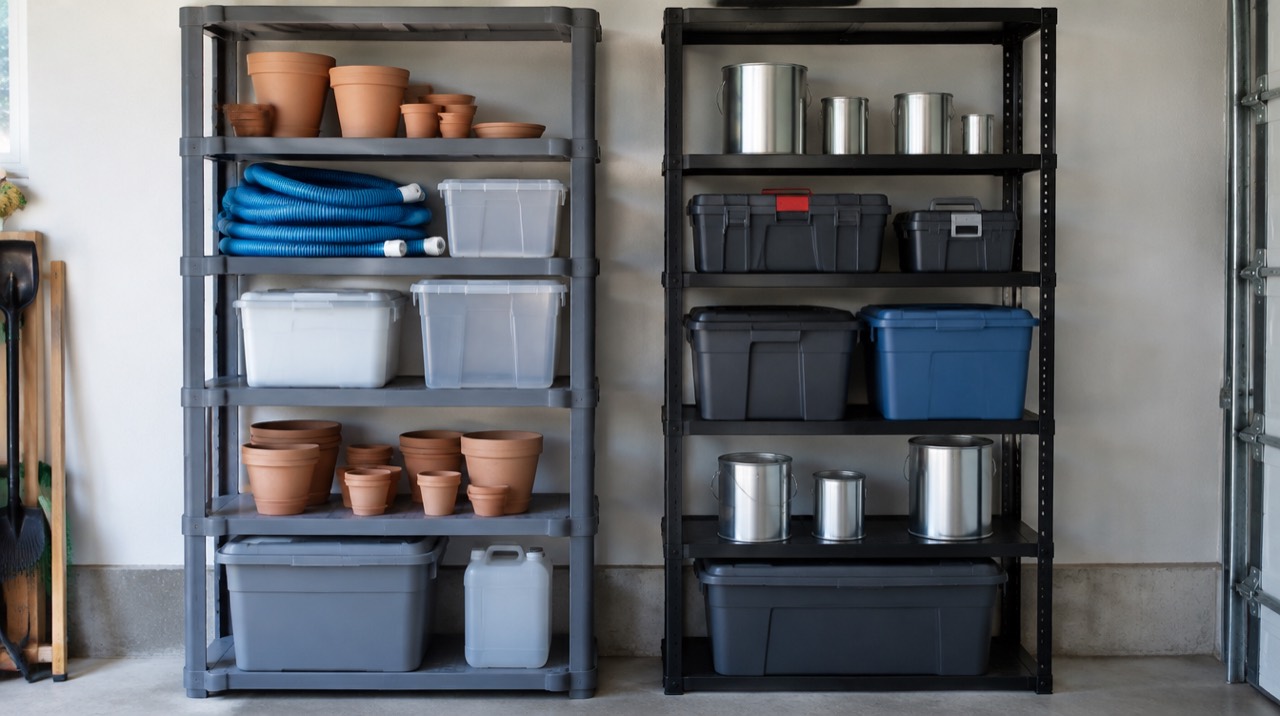
Resin shelving is immune to rust and easy to hose off. The trade-off is capacity. The Gracious Living 5-Shelf Premium Heavy Duty unit, a typical heavy-duty resin model, is listed by a retailer at up to 200 lb per shelf and 1,000 lb total, with wall brackets included. Steel units commonly list 500 to 1,200 lb per shelf. Our plastic vs steel garage shelving guide covers sag, tipping and when each makes sense.
Picks by situation
Featured (disclosed relationship): REIBII
REIBII pays a bonus commission on the units below. They are powder-coated steel, so they are rust resistant rather than rust proof, and REIBII does not publish a salt-spray rating. They are not for: an oceanfront garage that floods with spray or a garage with standing water on the floor, where plastic, galvanized or stainless shelving will outlast any painted steel.
Humid garage, heavy loads, totes: the REIBII 68.3 x 23.4 x 72-inch wire rack ($169.99). Wire decks (4.15 mm steel wire per the listing) let air move under totes; listed at 1,272 lb per shelf, with two anti-tip kits. Not for: walls under 70 inches wide.
Price as of November 18, 2026, 4:08 PM ET. Prices and availability are accurate as of the date/time indicated and are subject to change. Any price and availability information displayed on Amazon.com at the time of purchase will apply to the purchase of this product.
Humid garage, smaller wall: the REIBII 40 x 19.7 x 59.9-inch wire mesh unit ($89.98), powder coated, 560 lb per tier per its bullets (the listing gives both 2,200 and 2,240 lb totals; plan on the lower). Not for: two 27-gallon totes per shelf; one fits, with its 19.6-inch rim nearly flush at the front.
Price as of November 18, 2026, 4:08 PM ET. Prices and availability are accurate as of the date/time indicated and are subject to change. Any price and availability information displayed on Amazon.com at the time of purchase will apply to the purchase of this product.
Solid shelves for small parts: the REIBII 48.2-inch 5-tier ($175.98), whose listing calls its powder coat rust-resistant; 602 lb per shelf. Solid grid decks trap more moisture than wire, so use it in the drier corner of the garage.
Price as of November 18, 2026, 4:08 PM ET. Prices and availability are accurate as of the date/time indicated and are subject to change. Any price and availability information displayed on Amazon.com at the time of purchase will apply to the purchase of this product.
Wet or salty garage, light totes: a heavy-duty resin unit such as the Gracious Living 5-shelf. Check the current listing for per-shelf ratings.
Beach house, money no object: epoxy-coated or 316 stainless wire shelving from a commercial supplier, or hot-dip galvanized racking.
Dry, conditioned garage: chrome is fine, such as the Seville Classics unit above.
Keep the feet dry. Use plastic leveling feet or set each post on a plastic pad so it never stands in water. If the floor slopes toward the door, shim to level rather than letting one corner sit in the low spot; see garage shelving on an uneven floor.
Keep shelving away from the car’s drip zone. Snowmelt and road salt that run off a car are the fastest route to rusty uprights.
Leave a gap at the wall. An inch or two lets air circulate behind the unit; you can still anchor it with a bracket or strap.
Choose wire decks or vented totes so condensation does not sit under bins.
Skip particleboard and MDF in any garage that feels damp.
Inspect twice a year. Look at the bottom 6 inches of each upright and the deck corners. Sand light rust, prime and touch up.
Lower the humidity. Ventilation, a dehumidifier or simply sealing gaps around the door all help both shelving and what is stored on it.
Anchor it. A rusted base plate or a soft floor anchor weakens with time; check anchors when you inspect. See how to anchor garage shelving.
Bottom line
Rust in a garage comes from wet floors, trapped condensation and salt. Chrome is the wrong finish for those conditions by its makers’ own description. Powder-coated steel with wire decks is the practical default if you keep the feet dry and fix chips. Plastic never rusts but carries a fraction of the load. For salt air, epoxy-coated wire, hot-dip galvanized or 316 stainless steel are the finishes built for it, at a higher price.
Frequently asked questions
What garage shelving does not rust?
Plastic and resin shelving cannot rust, and stainless steel resists it best among metals. Next come epoxy-coated wire (Metro rates its Metroseal epoxy for high-humidity rooms and backs it with a 15-year rust warranty) and hot-dip galvanized steel. Powder-coated steel resists rust until the coating chips. Chrome-plated wire is for dry rooms only; makers say so.
Is chrome wire shelving OK in a garage?
Only in a dry one. Metro describes chrome as for dry storage and NSF listed for dry environments only, and Seville Classics says its chrome units offer corrosion resistance in dry environments. In a humid, unconditioned or coastal garage, chrome commonly develops rust spots; choose epoxy, powder coat, stainless or plastic instead.
Does powder-coated steel shelving rust?
The coating itself does not, but it is a barrier: once it is chipped or scratched to bare steel, rust starts at the damage and can creep under the paint. Touch up chips, keep feet off standing water, and inspect the bottom of the uprights each season. No shelving brand we found publishes salt-spray test hours for its powder coat.
Is plastic shelving better than steel for a damp garage?
For rust, yes; for weight, no. A heavy-duty resin unit such as the Gracious Living 5-shelf is listed at up to 200 lb per shelf, while steel units are commonly listed at 500 to 1,200 lb per shelf. Choose plastic for light totes in a wet or salty garage and steel with a good coating for heavy loads.
How do I keep steel shelves from rusting in a humid garage?
Keep the feet out of puddles with plastic leveling feet or a strip of plastic under each post, use wire decks so moisture does not sit under totes, avoid particleboard decks, wipe up salt-laden slush that drips off cars, touch up chips with matching paint, and reduce humidity with ventilation or a dehumidifier.
Free garage storage tools
Tote and Shelf Fit CalculatorPick your storage tote and shelf size to see how many fit per shelf, which way to face them, the overhang and how many units you need.
Plastic vs steel garage shelving compared on published load ratings, rust, moisture, depth and assembly, with spec-based steel picks from REIBII and Lionhon.
Best garage shelving, compared on published specs: per-shelf load ratings, 18 vs 24 inch depth for totes, wire vs MDF decks, and which unit suits which garage.
Corner garage shelving: how to set two units in an L, how big the blind corner is, corner wall shelves, anchoring at the corner and which unit depths to pair.